

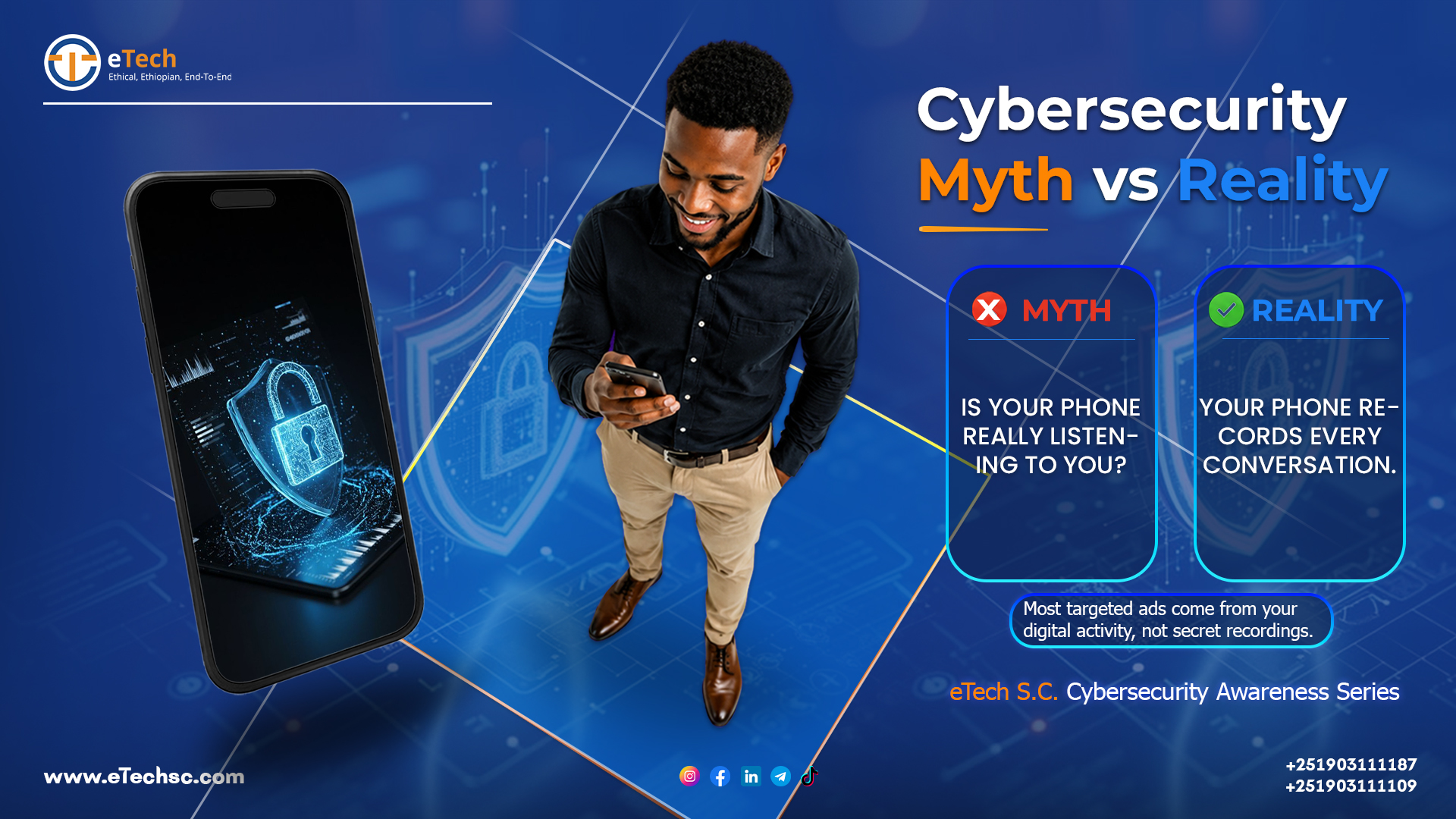
Have you ever talked about buying a product with a friend and, a few hours later, noticed advertisements for that same product appearing on your phone? Many people immediately think: “My phone must be listening to my conversations.”
This belief has become one of the most common cybersecurity myths of the digital age. While smartphones are powerful devices with microphones, cameras, and sensors, the reality behind targeted advertising and online recommendations is much more complex.
Is Your Phone Secretly Recording Everything You Say?
The short answer is: not in the way many people imagine.
Modern smartphones are designed with privacy controls and security protections that limit how applications access sensitive features such as microphones and cameras. Applications typically need permission before accessing your microphone, and operating systems provide indicators when these features are being used.
However, this does not mean privacy risks do not exist. Poorly secured applications, excessive permissions, phishing attacks, and malicious software can create opportunities for unauthorized access.
Why Do Ads Sometimes Feel Like They Know What You Are Thinking?
The explanation is usually related to the enormous amount of digital data collected through online activities, including:
- Search history
- Websites you visit
- Online purchases
- Location information
- Applications you use
- Content you interact with
- Similar interests from people with similar online behavior
Companies use algorithms to analyze patterns and predict what products or services may interest users. Sometimes these predictions are so accurate that they feel like your device is listening.
For example, if you search for travel destinations, watch travel videos, check hotel websites, or interact with travel-related content, advertising systems can quickly identify your interest and show relevant recommendations.
The Real Cybersecurity Risks You Should Pay Attention To
While your phone may not be constantly recording your conversations, there are real privacy threats that users should take seriously:
- Excessive App Permissions
Some applications request access to contacts, location, microphone, or storage even when they do not need them.
Best practice: Review app permissions regularly and disable unnecessary access.
- Malicious Applications
Downloading applications from unreliable sources can expose your device to spyware, malware, or unauthorized monitoring.
Best practice: Install applications only from trusted sources and keep your operating system updated.
- Weak Account Security
A compromised account can expose personal information, messages, and online activity.
Best practice: Use strong passwords and enable multi-factor authentication.
- Public Wi-Fi Risks
Unsecured networks can expose sensitive information if proper protections are not used.
Best practice: Avoid sharing sensitive information over unknown networks.
How to Protect Your Digital Privacy
To improve your smartphone security:
- Check application permissions regularly
- Keep your phone software updated
- Use strong passwords and multi-factor authentication
- Avoid suspicious links and applications
- Enable device encryption and security features
- Be aware of the information you share online
The Reality: Your Data Is the New Digital Asset
The biggest privacy concern today is not necessarily that your phone is secretly recording every conversation. The bigger challenge is the amount of digital information generated through everyday activities.
Understanding how technology works helps users make better decisions and protect their digital identity.
At eTech Share Company, we believe cybersecurity awareness is the first step toward building a safer digital environment. By understanding common myths, risks, and best practices, individuals and organizations can confidently navigate the digital world.
Stay informed. Stay secure.
